












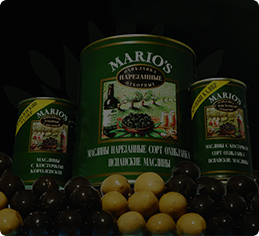








Olives Sour to bitter, piquant to sweet, the tangy taste of olives are harvested in September but available year round to make a zesty addition to salads, meat and poultry dishes and, of course, pizza.
Olives cannot be eaten right off of the tree; they require special processing to reduce their intrinsic bitterness. These processing methods vary with the olive variety, region where they are cultivated and the desired taste, texture and color. Some olives are picked green and unripe, while others are allowed to fully ripen on the tree to a black color. Yet, not all of the black olives available begin with a black color. Some processing methods expose unripe greens olives to the air, and the subsequent oxidation turns them a dark color. In addition to the original color of the
olive, the color is affected by fermentation and/or curing in oil, water, brine or salt.
Then green olives may be allowed to ferment before they are packed in a brine solution. Black olives are not allowed to ferment before packaging, which is why they taste milder than most green olives. Green olives that do not ferment before packing taste as mild as black olives.
Olives's History
Olives, one of the oldest foods known, are thought to have originated in Crete between five and seven thousand years ago. Their use quickly spread throughout Egypt , Greece , Palestine and Asia Minor .
Olives are mentioned in the Bible, depicted in ancient Egyptian art, and played an important role in Greek mythology. Since ancient times, the olive tree has provided food, fuel, timber and medicine for many civilizations. It has also been regarded as a symbol of peace and wisdom. Olive oil has been consumed since 3000 BC.
Olives were brought to America by the Spanish and Portuguese explorers during the 15th and 16th century. They were introduced into California by the Franciscan missionaries in the late 18th century. Today, much of the commercial cultivation of olives occurs in Spain , Italy , Greece and Turkey .
Health Benefits
Olives are a very good source of monounsaturated fats and a good source of vitamin E . Because monounsaturated fats are less easily damaged than polyunsaturated fats, it's good to have some in our cells' outer membranes and other cell structures that contain fats, such as the membranes that surround the cell's DNA and each of its energy-producing mitochondria. The stability of monounsaturated fats translates into a protective effect on the cell that, especially when combined with the antioxidant protection offered by vitamin E, can lower the risk of damage and inflammation. In addition to vitamin E, olives contain a variety of beneficial active phytonutrient compounds
including polyphenols and flavonoids, that also appear to have significant anti-inflammatory properties.
Because olives grow in a warm environment and the fruit has to protect itself from heat and bright sunshine, olives contain a lot of fenol-like substances. These substances could possibly play a role in the prevention and cure of thrombosis and arteriosclerosis.
Cellular Protection Against Free Radicals:
Vitamin E is the body's primary fat-soluble antioxidant. It goes after and directly neutralizes free radicals in all the fat-rich areas of the body. In combination, stable monounsaturated fats and vitamin E add a significant safety factor to cellular processes like energy production, a process that generates free radicals even when things are running smoothly. Protection From Cancer & Heart Disease : Free radical damage can lead to numerous ailments. For example, when free radicals cause the
oxidation of cholesterol, the oxidized cholesterol damages blood vessels and builds up in arteries, and can eventually lead to heart attack or stroke. So, by preventing the oxidation of cholesterol, the nutrients in olives help to prevent heart disease. Beneficial Anti-Inflammatory Effects : The anti-inflammatory actions of the monounsaturated fats, vitamin E and polyphenols in olives may also help reduce the severity of asthma osteoarthritis , and rheumatoid arthritis , three conditions where most of the damage is caused by high levels of free radicals. The vitamin E in olives may even help to reduce the frequency and/or intensity of hot flashes in women going through menopause.
How to Select and Store
While whole olives are very common, you may also find ones that have been pitted, as well as olives that have been stuffed with either peppers, garlic or almonds. If you purchase olives in bulk, make sure that the store has a good turnover and keeps their olives immersed in brine for freshness and to retain moistness. Olives will keep freshest if stored in an airtight container in the refrigerator. Tips for Preparing Olives:
To pit olives, press them with the flat side of a broad bladed knife. This will help break the flesh so that you can easily remove the pit with your fingers or the knife. The brine in which olives are packed can be used as a replacement for salted water in recipes.
A Few Quick Serving Ideas:
Olive tapenade is a delicious and easy-to-make spread that you can use as a dip, sandwich spread, or topping for fish and poultry. To make it, put pitted olives in a food processor with olive oil, garlic, and your favorite seasonings. Toss pasta with chopped olives, tomatoes, garlic, olive oil and fresh herbs of your choice. Marinate olives in olive oil, lemon zest, coriander seeds and cumin seeds. Add chopped olives to your favorite tuna or chicken salad recipe. Set out a small plate of olives on the dinner table along with some vegetable crudit¨¦s for your family to enjoy with the meal. Did you know?
* An olive tree can live for over one thousand years.
* We've been cultivated in Australia on and off for 150 years.
* Those of us that are good to eat as table olives are different from those that are best for producing olive oil. Good table olives have a much lower fat content than oil olives.
* People in Turkey are the largest consumers of table olives in the world. We are also eaten in large quantities in Greece (including for breakfast), southern Italy , southern France , Spain and Portugal.
The olives are high in salt as they are preserved in dry salt or in a brine (salt) solution.
SHENZHEN LONGCHI INDUSTRIAL CO.,LTD
RM.E,22/F,South Flat,Parkway Mansion,3019 Sungang East Road,Shenzhen.P.R.C
www.longchi.cn E-mail:Info@longchi.com.cn
Copyright by Shenzhen Longchi Industrial Co., Ltd. All Right Reserved 1994-2008
粤ICP备 05134556号