









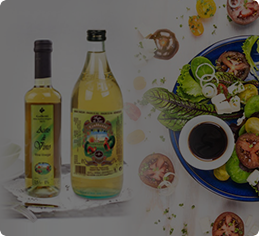

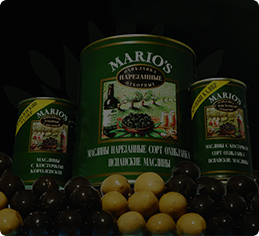





The typical fresh olives flavour of Olitalia Extra Virgin Olive Oil is delicately from the delicate press of high quality olives, which make this oil won the 2006 Supreme International Award at the prestigious "International Taste and Quality Institute" in Brussels. This oil has already created a loyal following in Italy and in more than 120 countries around the world. Olitalia Extra Virgin Olive Oil, plays a vital role in our contemporary diet, adding unique flavour, goodness and lustre to our dishes, which meet most for your strict request for taste..
          Usage: dressing, salad, cooking, frying, pickling , baking, drinking, etc.
          Olitalia Pomace Olive Oil is a perfect combination of refined pomace oil and extra virgin olive oil. The refined olive pomace oil comes from the oil extracted from the pomace paste obtained after grinding in the mill. It is improved with extra virgin olive oil to enhance its aroma, taste and color, which is the best oil for deep frying!
 
            Usage: cooking, frying, baking, etc.
          Seventy seven percent (77%) of the fat in olive oil is monounsaturated, and nine percent (9%) is polyunsaturated fat; fourteen percent (14%) is vegetable-derived saturated fat. Olive oils also contain the antioxidants beta-carotene and Vitamin E, as well as the phenolic compounds tyrosol and hydroxytyrosol. Olive oil contains no salt and is naturally cholesterol-free.


* Olive oil contains 80% monounsaturated fatty acids which help reduce cholesterol levels.
* Olive oil is full of vitamin E (a powerful anti-oxidant) which has been shown to reduce gastric acidity.
* The emollient effect of olive oil protects against ulcers, it aids the passage of food through the intestines, and it reduces the risk of gallstones.
* Olive oil beautifies your skin, hair and nails.


Things to remember
* Choosing olive oil as your main source of dietary fat, along with a high intake of plant food, may reduce your risk of cardiovascular disease and diabetes.
* Moderate amounts of olive oil may also help to reduce excess body fat, especially around the abdomen, in the context of a low energy-dense diet that is high in plant foods and low in 'hidden fats'.

 
  F.A.Q  
 
Is olive oil which looks solid (Frozen) in the bottle bad for you?
        No. The presence of solid parts (similar to grains of rice) indicates that the oil was stored at low temperature and it has frozen. This fact does absolutely not alter the quality but in fact it is a guarantee that the product was stored away from heat. Once the bottle is kept in a warm environment such as your kitchen, it will slowly return crystal clear.

What are the suggestions for storing olive oil in the home?
        To maintain the quality of the olive oil, keep it stored in places that don't have direct light and keep it away from ovens or heat sources. The cold weather makes the oil "cloudy" but it does not affect its quality, while the heat and the direct light, instead, they accelerate its oxidation increasing its rancidity.

What is the acidity?
        Acidity refers to the level of acidity in the oil at the time of packing. The general rule of thumb is, 'the lower the acidity the better the quality of oil'. The oil extracted from an olive at its highest point of maturity is not particularly acidic, but it can become so if the oils are stored poorly or for too long. To be classified as an extra virgin olive oil, it has to have an acidity level of less than 0.8% at the time of packing.


Rules for frying with Olive Oil
        In order to fry correctly with this oil, a series of precautions should be taken:
        a) Oil should be heated by moderate heat, and not over a strong flame.
        b) Oil should never be allowed to smoke, as this means that the critical temperature has been reached and thus it is easy for undesirable by - products to be formed.
An easy way to check the temperature of the oil is to toss in a little piece of bread:
* If the bread goes to the bottom and doesn't rise, the temperature is about 150 , a temperature that is still low for proper frying.

*  If the bread falls and rises slowly to the surface, the temperature is between 160 and 165 . This Temperature is recommended for frying delicate foods (such as vegetables).
*  If the bread falls and rises to the surface after a few seconds, the temperature is between 175 and 180 . This temperature is recommendable for frying most foods.
* If the bread doesn't sink and toasts, the temperature is high ( between 180 and 185 ).


        c) The oil should be strained immediately after using it in order to get rid of the food remains that it might contain, which might accelerate its degradation.
        d) Olive oil may be used a maximum of 5 or 6 times for frying as long as all of these details have been seen to, although it is recommendable to use it fewer times.
Other nutritional considerations that should be kept in mind with respect to frying with olive oil:
        a) Olive oil, if used correctly for frying, penetrates very little in the food, and so the caloric value of the food does not increase much, something which is not the case when seed oils are used.
        b) The nutritional quality of fried foods does not decrease, nor does the availability of the different nutrients that it is made up of, as the temperature reached within the food is not high and the frying time is short. This is not the case, either, when foods are fried with seed oils.

 
SHENZHEN LONGCHI INDUSTRIAL CO.,LTD
RM.E,22/F,South Flat,Parkway Mansion,3019 Sungang East Road,Shenzhen.P.R.C
www.longchi.cn E-mail:Info@longchi.com.cn
Copyright by Shenzhen Longchi Industrial Co., Ltd. All Right Reserved 1994-2008
ÔÁICP±¸ 05134556ºÅ